6
6

Big Pyramid as a mathematical model
 16. 04. 2024



 6
16. 04. 2024
8
15. 04. 2024
1
1
13. 04. 2024
30
28. 02. 2018
6
16. 04. 2024
8
15. 04. 2024
1
1
13. 04. 2024
30
28. 02. 2018

According to one theory, hallucinations are not the product of a diseased brain and exaggerated imagination. It is possible that in a certain state of consciousness we see things that one does not normally have or cannot see.
We can control it!
Researchers at Yale University, Albert Powers and Philip Korlett, have decided to examine whether there are differences between hallucinations of mentally ill and healthy people.
They managed to put together a group of volunteers, including sensibles (according to their own evaluation). They all selected according to the same criteria; the subjects claimed to have contact with the subtle world in the form of voices every day. All were subjected to tests that showed that none of the probands were lying or suffering from mental disorders.
The next step was to compare information from patients with schizophrenia and manic-depressive psychosis with information from the mentally healthy from the control group. And it turned out that sensible hearing voices accept them positively and are convinced of their usefulness in solving certain situations. In contrast, mentally ill people are afraid of voices (or their bearers) and believe that these beings want to harm them. A typical example is when voices tell the sensible information about a person or event and suggest how to behave in that situation. They can "advise" a schizophrenic to hurt himself, commit suicide, or attack someone else, scare him, and make fun of him.
In addition, a sick person usually cannot "turn off" his hallucinations, but a healthy individual with paranormal abilities has his voices under control and can use them to his advantage. "These people have a high level of control over their inner voices," said Korlett, one of the authors of the survey. "They like to make contact with them and consider them to be positive or neutral forces in their lives. We believe that people with such abilities can bring us new knowledge in the fields of neurology, cognitive psychology, and, as a result, new possibilities for treating similar symptoms.
See your double and die
A special category includes the stories of people who met their double. In psychiatry, such cases are well known as autoscopic hallucinations, which can occur in both the mentally ill and healthy.
Experts have determined the basic conditions under which duplicates occur, and they usually occur unexpectedly. The double most often has the face of the original and cannot be touched. Although the dimensions of the double are mostly the same as the original, sometimes only individual parts of the body, such as the head or torso, are visible. The details can be very clear, but the colors can be indistinct. Alternatively, the double is colorless - it is transparent and gives the impression of a jelly-like mass or as a reflection in a sheet of glass. Doubles very often mimic facial expressions. The mentally ill often complain that the double parodies them.
The phenomenon of doubles has been described more than once in the art literature. In his poem Dvojník, Heinrich Heine described the way in which his copy appears to man. And Dostoevsky's short story of the same name tells of the hallucinations of a mentally ill person. Folk superstition from earlier times states that if you see your double, death awaits you soon. In the textbook General Psychopathology for Medical Students, it is stated that autoscopic hallucinations are very often associated with more severe forms of brain disorders.
The clinical case is an event that happened to the famous French writer Guy de Maupassant in 1887. At that time, Maupassant worked on the short story Orel, which deals with an invisible creature who settled in the main character's house. A man entered the room where Maupassant worked and sat down against him and began to dictate the continuation of the story. It took the writer a moment to realize that he was looking at his double, who had soon disappeared. Soon after, Maupassant developed a mental disorder that had a major impact on his imminent death.
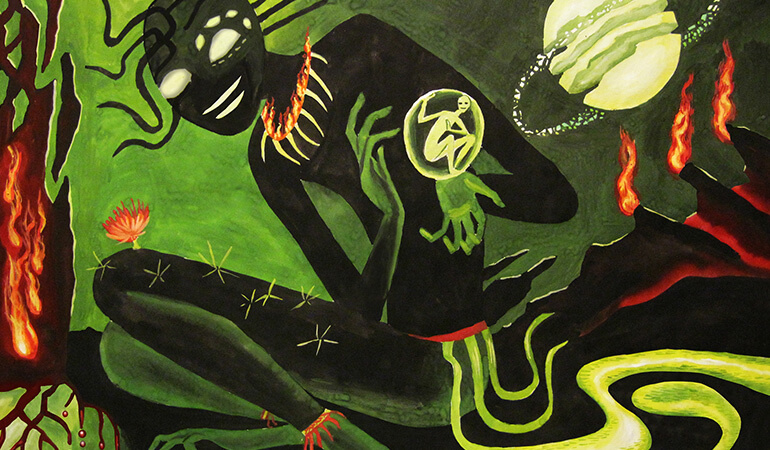 The classic case of autoscopic hallucinations is the case of Dr. Berkovich, which was described in detail by the outstanding Russian poet Vasily Zhukovsky in the article "On Ghosts". Zhukovsky heard about the story from his friend AM Druzinin, the general director of the schools. As Družinin recalled, they had known Berkovič only briefly at that time, and once he went to visit him together with Mrs. Perec. They talked very pleasantly and cheerfully, and around ten in the evening Berkovic's wife asked the doctor to go and see if she was already set for dinner.
Berkovic left for the dining room and returned in less than a minute, pale and barely speaking by the end of the evening. After dinner, Berkovič went to accompany Mrs. Perec and apparently caught a cold. The next day, Druzinin received a message that the doctor had fallen ill and begged him to come. As soon as Druzinin appeared, Berkovic told him: "I will die soon, he saw his death with his own eyes. When I came to the dining room yesterday, I saw a casket on the table surrounded by candles, and I lay in the casket. Obviously, you'll bury me soon. ”And indeed, he died soon after.
Zukowski himself explained the following: "It is very likely that Berkovic has had the germs of disease before, the disease has frozen the illness and the illness together with the sight of the specter resulted in death."
In 1907, a book by the writer and journalist VV Bitner was published in St. Petersburg entitled "A Trip to the Unknown and Mysterious Ends", where he dealt with the phenomenon of doubles. "This phenomenon is really unusual," the author writes, "testifies to a serious disease of the whole organism and points to a disorder of the nervous system. So when something like this happens to someone, it happens in most cases shortly before his death or even at the moment of the transition to the afterlife. Therefore, the double can only be a "sinister" diagnostic symptom, there is nothing prophetic in this phenomenon. "
Sick or very sensitive?
But parapsychologists are in no hurry to include voices and other hallucinations in the "compartment" of the non-existent. They are adherents of the hypothesis that astral beings actually live next to us, but in the usual state of consciousness we cannot perceive them.
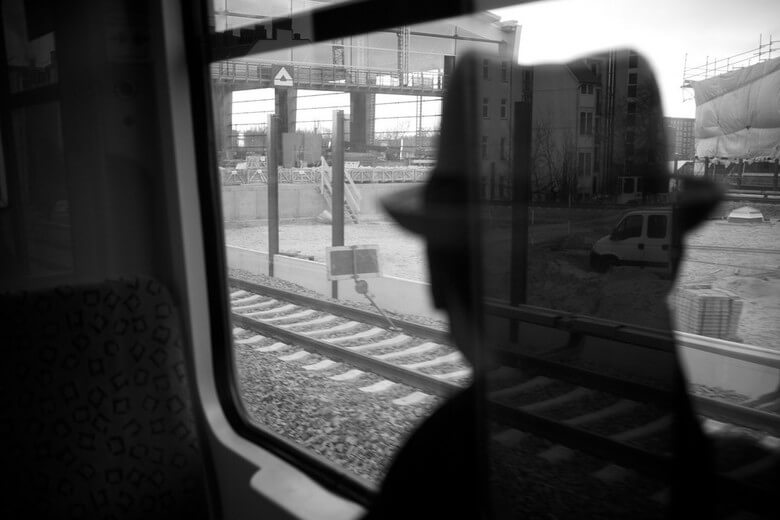 However, when the human psyche fails due to a brain injury or high fever, the perception of the subtle world begins to occur, mostly from the darker side. As for the word sensibility, it is not for nothing that it means "very sensitive". It is obvious that there are people who are more sensitive than others, can enter the state of expanded consciousness and perceive the subtle world. At the same time, they can filter it and separate destructive beings from others.
It is possible that hallucinations as such may simply be a certain ability of an individual's psyche. So the sensibilist can speak not to another being, but to himself, while connecting to the information field of the Universe. (This assumption explains the phenomenon of doubles very well.) And information comes to it in the form of voices or phantoms.
Just remember the strange and distraught people who have really said the essential things and predicted the future. But because their psyche was disturbed, the information was often chaotic. If all of this were purely pathological, it is unlikely that the information obtained in this way from the clairvoyants will be reliable.
In short, we have something to think about. And we certainly must not immediately label a person who sees or hears something unusual as a fool. It is possible that he simply has access to things that most of us do not perceive or are not able to perceive.